
 German
Discover Portugal off-road: trails for beginners and experts
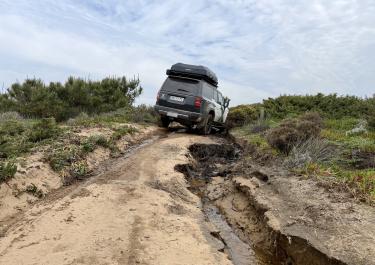
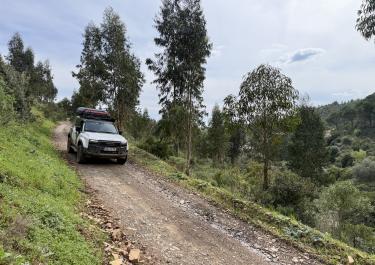
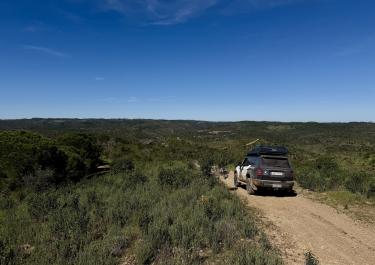
In Portugal, off-road vehicles are permitted to drive on most tracks. In the countryside, you’ll often find unspoilt nature with fewer than 20 inhabitants per square kilometre.
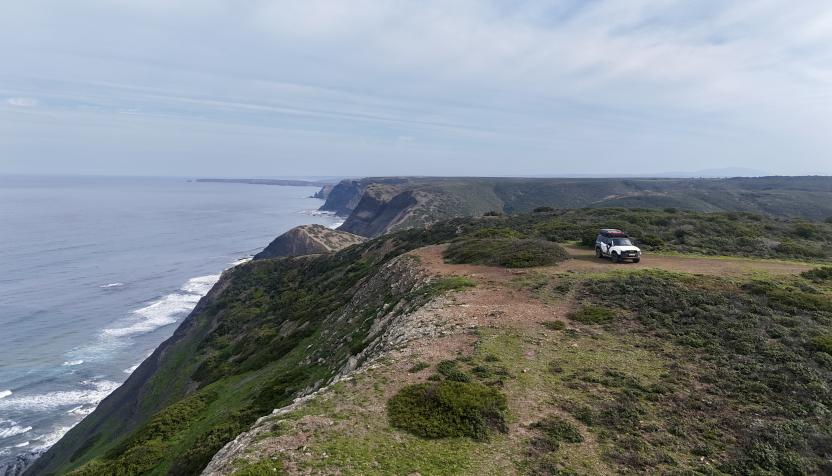
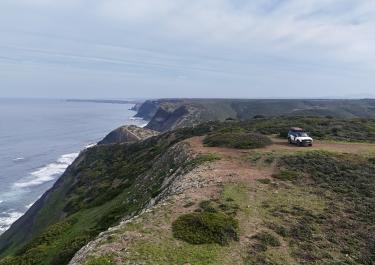
Chilling out on the beach is great. Chilling out on the beach after an off-road adventure is even better. Overlanding in Portugal is the best.
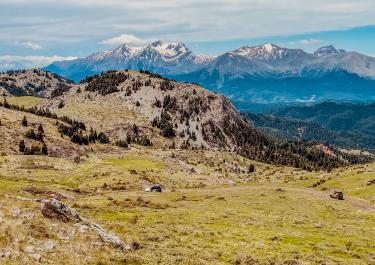
In Trás-os-Montes, in the north of Portugal, the rolling hills give way to mountainous terrain with vast oak forests and deep gorges. Here, the tracks are generally a bit more challenging. Things get particularly exciting in the high mountains: the Serra da Estrela in central Portugal. The often challenging, stony routes through the Serra da Estrela are real highlights for keen off-roaders.
 Portugal
Portugal | All off-road routes
Here you’ll find all the legal off-road routes in Portugal – clearly listed, with handy filters and a map view.
Experience off-roading in Portugal: the best routes for overlanders
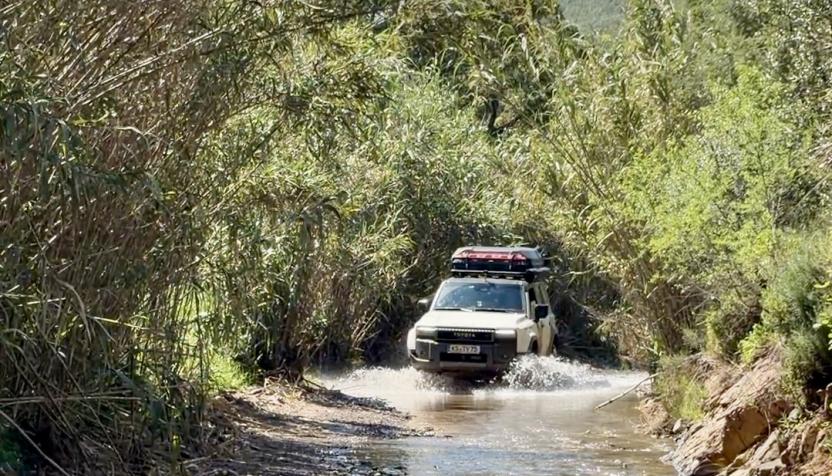
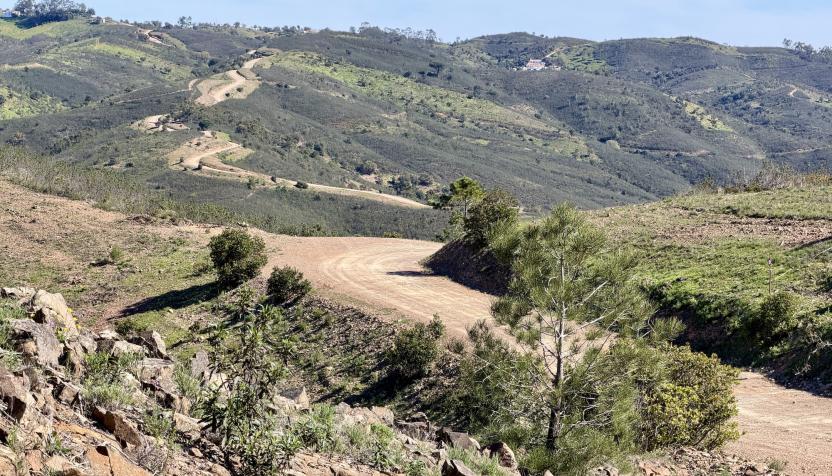
The north, south and centre of Portugal boast some of the coolest off-road highlights. As well as the fairly easy-to-navigate dirt and gravel tracks behind the coast, the mountainous regions also offer challenging routes featuring river crossings, scree and muddy sections. Off-roaders with a taste for adventure will be in their element here.
What do Portugal’s various off-road regions have to offer?
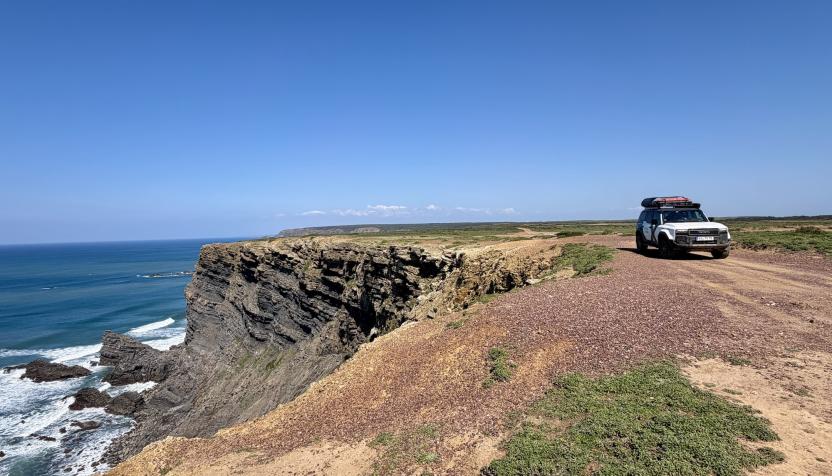
IIn the Algarve’s hinterland – for example, in the Serra de Monchique – there are steep climbs that offer impressive views of the Atlantic. On the dusty tracks through the scrubland of the Costa Vincentina Nature Park, you’ll have the best chance of spotting the Iberian lynx, the genet and the rare otter. White storks, red-billed choughs, booted eagles and even a few vultures nest on the steep cliffs of the Costa Vincencia.
In the Alentejo, you can explore UNESCO World Heritage Sites and impressive fortifications along historic off-road routes running alongside the Spanish border. In summer, many of the Rio Guadiana’s tributaries dry up, turning them into sandy challenges for 4x4 and enduro riders. In central Portugal, numerous off-road routes criss-cross the Picotto de Melgaço at lofty heights. On the often demanding trails through the high plateaus of the Serra da Estrela, you’ll ride along rocky routes that offer sweeping views of the countryside.
In the north, Portugal’s only national park awaits you. It offers spectacular gorges and deep mountain lakes where herds of wild horses graze. In the Peneda-Gerês National Park, there are ancient granite tracks that have withstood the elements for centuries. Careful driving is essential here: many a tyre has met its end on these roads. The narrow dirt tracks of the Serra da Lousã are less of an adventure. Here, you’ll drive through dense forest to reach the legendary slate villages, built entirely from local materials.
Best time of year for an off-road tour through Portugal
If you’d like to combine your off-road trip in Portugal with a beach holiday, you should plan your holiday for the months of May to October. Although Portugal is known for its mild climate, if you’re also planning to visit the high-altitude regions of the Serra da Estrela or the Picoto de Melgaço, you shouldn’t set off too early in the spring. There’s considerably more rainfall there in winter than on the coast.
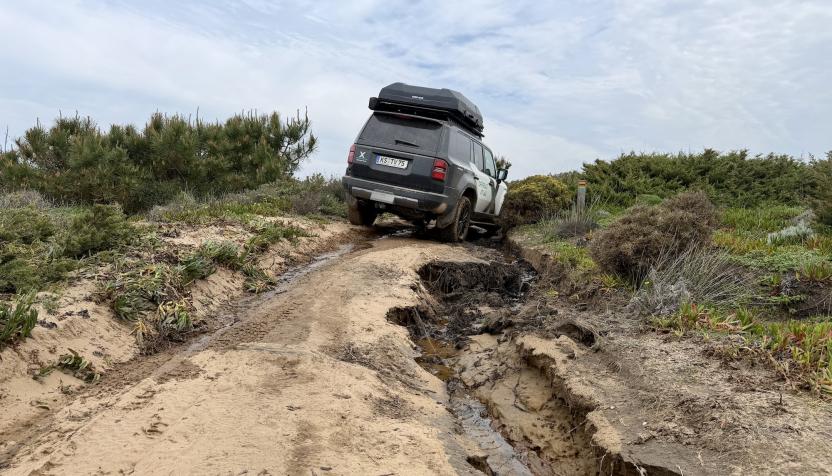
Many mountain tracks then turn into slippery slides due to wet conditions, ice or snow, which go beyond the scope of normal off-road challenges. Even the red tracks in the Alentejo, which are usually so beginner-friendly, often become veritable traps for off-road vehicles in winter. If you’d prefer to explore Portugal outside the usual tourist season, you should aim for October or November.
In October, the ground is still parched from the summer and can absorb very little water, even when it does rain – which is rather rare. Sea temperatures in Portugal are still quite high in October. From November onwards, you should expect more frequent rainfall in the mountains, although snow or ice are not yet to be expected. The sea is a little cooler by then, but nowhere near as cold as in early spring.
Special features and traffic regulations in Portugal
Speed limits in Portugal
The speed limits for vehicles under 3.5 tonnes in Portugal are as follows:
- within built-up areas: a maximum of 50 km/h
- outside built-up areas: a maximum of 90 km/h
- on dual carriageways: a maximum of 100 km/h
- on motorways: a maximum of 120 km/h
For vehicles weighing over 3.5 tonnes, the speed limits are
- a maximum of 50 km/h in built-up areas
- a maximum of 80 km/h outside built-up areas
- a maximum of 90 km/h on expressways
- a maximum of 100 km/h on motorways
Is it compulsory to drive with your headlights on in Portugal?
On the IP 5 from Vilar Formos to Aveiro and on some other signposted routes, it is compulsory to drive with your headlights on 24 hours a day, all year round. As a general rule, motorcyclists must drive with their dipped headlights on everywhere in Portugal.
Fines in Portugal
Fines in Portugal often have to be paid on the spot. If the driver refuses to pay, the vehicle may, in the worst-case scenario, be impounded. This is yet another reason to always carry some cash with you in Portugal.
What is the official blood alcohol limit in Portugal?
The blood alcohol limit in Portugal is 0.5. For drivers with less than three years’ driving experience, the limit is 0.2. What does this mean in practice? An experienced driver weighing at least 80 kg can easily manage half a litre of beer or a glass of wine. Novice drivers of the same weight may drink no more than a small glass of beer or half a glass of wine before driving. Even stricter limits apply to women, as they metabolise alcohol differently to men.
Rules on right of way in Portugal
In the Portuguese countryside, unpaved tracks may be used provided there are no signs or barriers prohibiting this. However, tracks along the coast and in nature reserves have often been closed to motorised traffic in recent years.
Interesting facts about Portugal
Time difference
Compared to German time, it is one hour earlier in Portugal (time difference: -1 hour).
Emergency number in Portugal
The German emergency number 112 is also valid in Portugal.
Payments
You can withdraw cash from cash machines. In larger towns and cities, almost all restaurants and shops accept Visa and Mastercard, or contactless payments via mobile phone. In smaller restaurants and shops, however, you will often need cash to pay your bills.
Tipping
In Portugal, it is customary to round up the bill in restaurants and cafés. If paying in cash, simply leave the change on the table. If paying by card, leave an appropriate amount on the table as well.
Important:
Do not give the tip to the waiter or waitress in person. According to Portuguese customs, this would be considered offensive. You would be publicly highlighting the fact that this person relies on even the smallest earnings. It might even happen that the waiter or waitress – with a tear in their eye – refuses your tip in order to save face.
Free-standing camping and wild camping in Portugal
In Portugal, wild camping is generally prohibited and is frequently monitored, particularly in tourist areas and nature reserves. Camping on private land is also not permitted. But what do you do when you’ve been driving along dusty tracks all day, you’re starting to feel sleepy, and there’s not a campsite to be found far and wide?
If you happen to spot a cosy spot for the night in the middle of nowhere, the chances are rather slim that any local residents will report you to the police. After all, hardly anyone lives there anyway. And apart from that, the Portuguese authorities are bound to have more important things to do during the holiday season than hunting down wild campers in remote areas.
Our tip: If you’re near nature reserves or coastal areas, be sure to stay at campsites. In the mountains and in Portugal’s remote countryside, you can also set up camp in the middle of nowhere for a night, provided you don’t cause any damage to the natural environment.
Conclusion
We believe that Portugal is a top off-road destination in south-western Europe. Why?
1. Most public tracks in Portugal can be driven on legally.
2. There are no road tolls in Portugal.
3. The mountains and the sea are close together.
4. You may spot rare animal species.
5. Portugal has off-road tracks to suit every level.
More from the magazine