 German
Off-road adventures in Iceland: Tracks between fire and ice for self-drivers
Just a stone's throw away from the Arctic Circle and yet the cold remains within limits: Iceland is something very special in every respect. Apart from the geysers, thermal baths, ice caves and lava deserts, the island also offers a road network that is only half paved. Are you looking for an extraordinary road trip with your off-road vehicle? Then take a look at our off-road tracks in Iceland.
Only a stone's throw away from the Arctic Circle and yet the cold remains within limits: Iceland is something very special in every respect. Apart from the geysers, thermal baths, ice caves and lava deserts, the island also offers a road network that is only half paved. Are you looking for an extraordinary road trip with your off-road vehicle? Then take a look at our off-road tracks in Iceland.
 Island
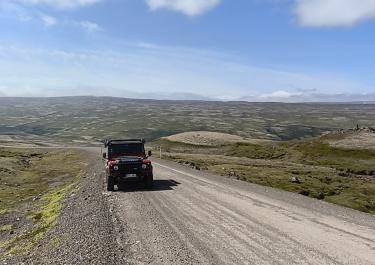
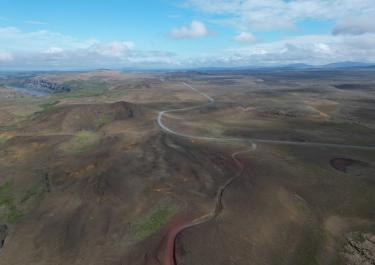
Iceland | All offroad tracks
Here you will find all legal off-road routes in Iceland - clearly listed, with practical filters and map view.
Where are the best off-road tracks in Iceland?
Island is definitely a trendy travel destination. With its unique natural phenomena, the island attracts around 2.2 to 2.3 million visitors every year. Providers of jeep safaris or guided 4x4 tours regularly take their guests to the most famous attractions via unpaved roads. The Askja volcano crater with its lunar landscape, Landmannalaugar with its colorful mountains and hot springs or the Þórsmörk glacier valley really are absolute highlights that every Iceland traveler should have seen.
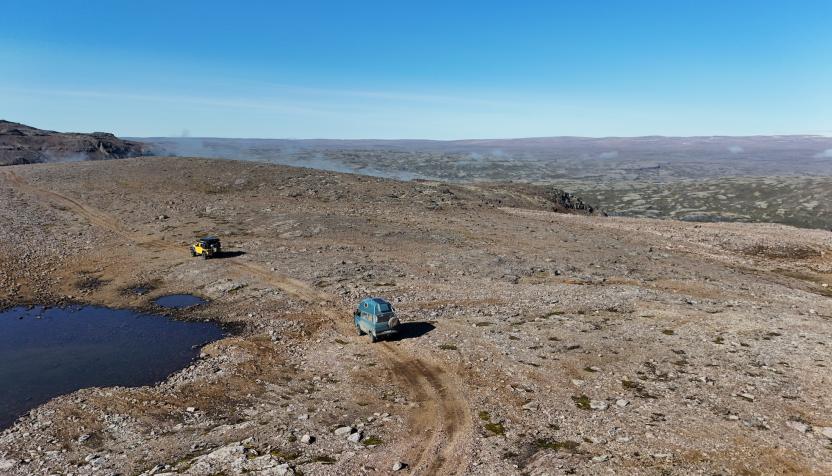
But during the main tourist season, the tourist hotspots can get a little busier. If you want to get to know lesser-known attractions and landscapes, you should plan your Iceland off-road trip as a self-driver. In the Icelandic highlands, however, you will need a 4x4 vehicle with high ground clearance or a good off-road motorcycle. There are hardly any tracks without water crossings. You should also have some off-road experience for most of the routes in the Highlands.
The tracks in the Westfjords are a completely different story: they are mainly relatively easy to drive on gravel roads that often run along the coast. Well-known off-road routes in this region include the route over the Hrafnseyrarheiði mountain pass to the "thundering waterfall" Dynjandi or the mostly gravel road to the "bird cliff" Látrabjarg in the south of the Westfjords. However, our scouts have found even more interesting tracks that have not yet been published anywhere. You are unlikely to meet many other holidaymakers on these tracks.
These Icelandic areas are particularly popular with off-roaders:
- Thorsmork: impressive glacial valley between mountains of ice.
- Askja Caldera area: remote highland region around a huge volcano
- Westfjords: dramatic coastal scenery with steep cliffs
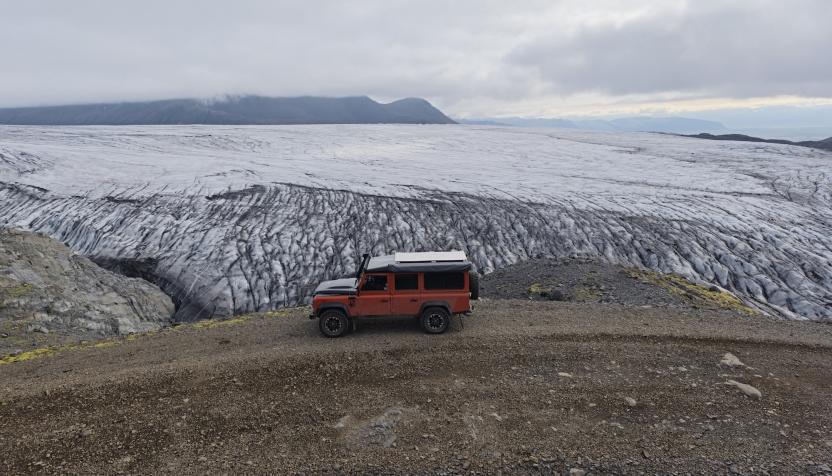
- Skaftafell: icebergs, ice tunnels and ice rivers in Vatnajökull National Park
- Landmannalaugar: hot springs, colorful mountains and marked hiking trails
Best time to travel to Iceland for an off-road vacation
On the world's largest volcanic island, it is generally warmer on the coast than inland. On the one hand, the sea serves as a heat buffer and on the other, the Gulf Stream ensures warm and humid weather in some southern regions. Between June and August, the maximum summer temperatures in Iceland can reach 12 to 13ºC. However, it usually only gets up to 10ºC here even in midsummer - and it is cooler inland anyway.
It gets frosty as early as November. The sub-zero temperatures last well into April. In the highlands, winter even lasts from October to May. From September to May inclusive, you should also expect snowfall in Iceland - although the snow usually doesn't last long in spring and fall. Winter tires are compulsory in Iceland from the beginning of November to mid-April. The locals often use four-wheel drive vehicles due to the numerous unpaved roads and the long winter. In addition, most Icelanders drive with spikes during the bad weather season.
In general, the best time to travel off-road in Iceland is between the end of May and the beginning of September. If you are mainly interested in off-road tracks in the highlands, you should plan your adventure road trip between June and the end of August anyway, as many roads are closed during the other months. However, the main travel season in Iceland is in July and August. If you are looking for solitude, you should therefore pack an extra sweater and explore the island of fire and ice in June.
Off-road driving and traffic rules in Iceland
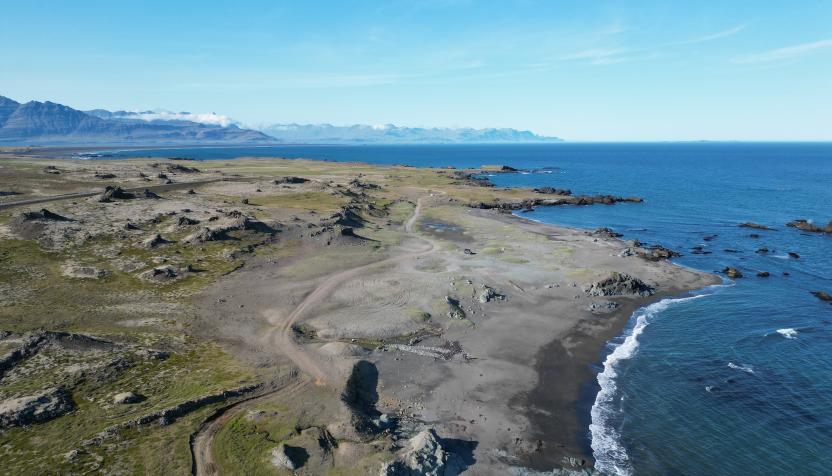
Earth and gravel roads, which we call off-road tracks, are simply part of the normal road network in Iceland. They are known there as "F1 roads". Depending on the altitude, some F1 roads are closed in the fall for the entire winter season and may not be used again until the beginning of May in extreme locations. You will often find the sign "Malbik endar" (end of asphalt) at the transition from a tarred road to a gravel road.
If the unpaved road is closed, there is usually a sign saying "Lökad" (closed) or "Őll umferd bönnar" (no through traffic). You should stick to these signs. Not only because you have to reckon with serious difficulties in terms of navigability on this route at certain times. It's also about the drastic fines that can be imposed for such violations of traffic regulations. Incidentally, this also applies to cross-country driving.
In addition, dipped headlights must be used on all roads and paths in Iceland during the day all year round. Icelanders are accommodating when it comes to free standing: Overnight stays outside of official campsites are permitted in parking lots or on the roadside for one night. For an overnight stay next to your off-road track, however, look for a place with solid ground right next to the road so that you don't leave any tire tracks. There is a high risk of erosion in Iceland. This is why cross-country riders are punished by the authorities.
Special features of Icelandic culture
Iceland is far removed from the rest of civilization and has therefore developed many customs and rules that differ from its neighbouring countries. Where else, for example, are mutton testicles or black-smoked sheep's heads among the country's typical delicacies? But don't worry, the restaurants on the island also offer their visitors Central European dishes.
Another special feature of Iceland is that there is no midsummer festival here. Payment in Iceland is made in ISK (Icelandic kroner). One krona is equal to 100 aurars. You can get cash almost everywhere on the island with a suitable card at ATMs. However, you won't need it too often: Cashless payments are widespread here, even for smaller amounts of money.
The drink-drive limit in Iceland is generally 0.5% for all drivers. Interesting for self-sufficient drivers: Alcoholic drinks with an alcohol content of more than 2.5% may only be sold in special stores in Iceland. In a country with fewer than four inhabitants per square kilometer, around 60% of whom live in the capital, you will hardly ever meet a local on our roads. But if you do, say hello in a friendly manner and maybe even be ready for a chat - just like in a small village.
Conclusion
Island offers off-road vacationers landscapes and attractions that they cannot discover anywhere else. Around 50% of the island's road network consists of unpaved roads. Unlike in some countries further south, Icelanders have a positive attitude towards off-road driving. Around half of the vehicles registered in Iceland are off-road vehicles.
However, cross-country driving and driving off the marked roads is strictly sanctioned in Iceland. This is because there is an extremely high risk of erosion on the island. However, free standing is permitted for one night. The best time for an off-road trip through Iceland is from the beginning of June to the end of August. This is also when F1 roads in high-altitude regions are passable again.
More from the magazine