 German
Off-road holidays in Greece: exciting routes, mountains and beaches
Are you looking for an exciting off-road destination in Europe? How about Greece, with its 200,000 km of unpaved dirt tracks?
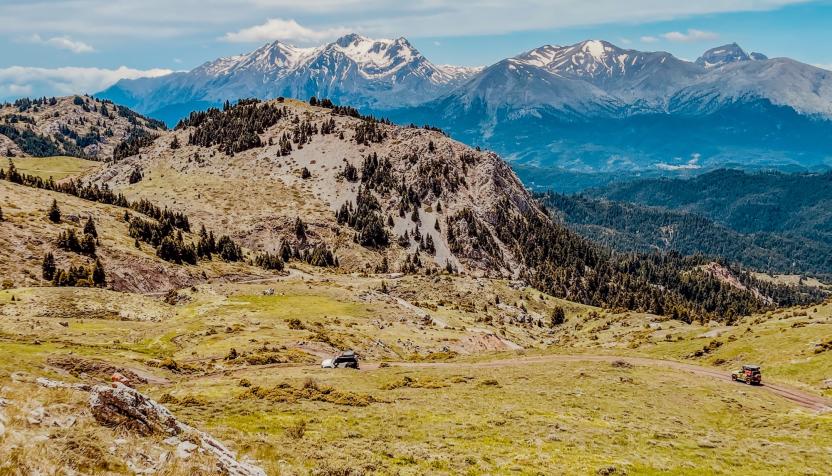
If you’re looking to not only experience adventure in the mountains on your off-road trip but also relax on the beach, you should take a closer look at our Greek routes. In Greece, you can explore adventurous mountain tracks, then take a leisurely dip in the warm sea, and finally enjoy the sunset from the terrace of a taverna – all in the course of a single day.
No wonder the gods of antiquity chose the peaks of Mount Olympus as their home: at altitudes of up to 3,000 metres, they were far enough away from human civilisation, yet still just a stone’s throw from the nearest beach bar. Anyone wishing to experience Greece authentically should leave the beaches behind and head into the mountains on a dirt bike or in a 4x4. The most exciting corners of Greece can only be reached off-road.
 Greece
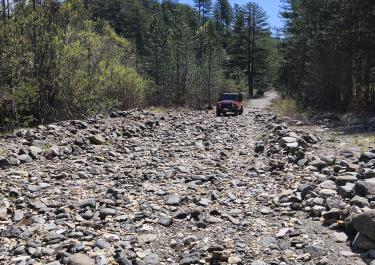
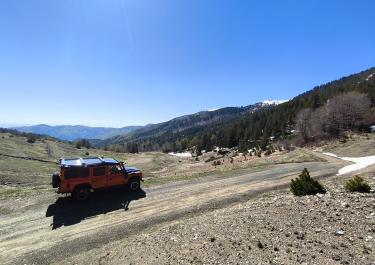
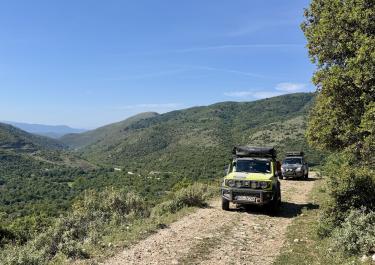
Greece | All off-road routes
Here you’ll find all the legal off-road routes in Greece – clearly listed, with handy filters and a map view.
Insider tips for an off-road trip through Greece
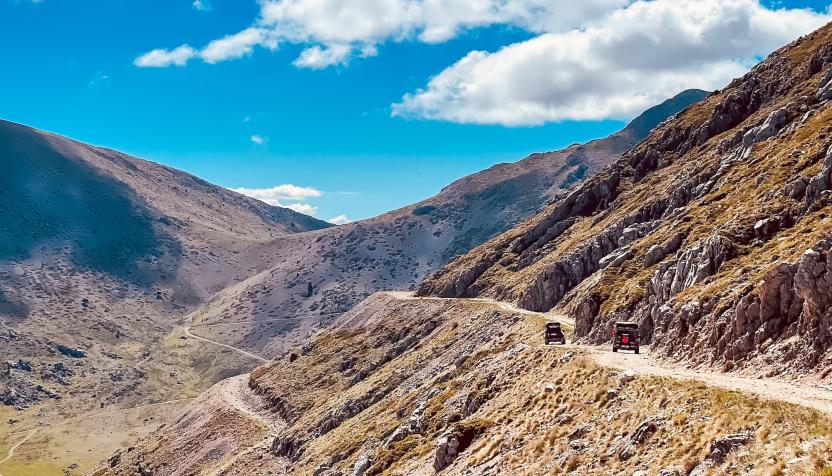
For overlanders, Greece is a real paradise. There is hardly any other country in southern Europe that can boast so many legally accessible, unpaved forest and farm tracks. Even today, many villages in the Greek mountains are still connected only by gravel or dirt tracks.
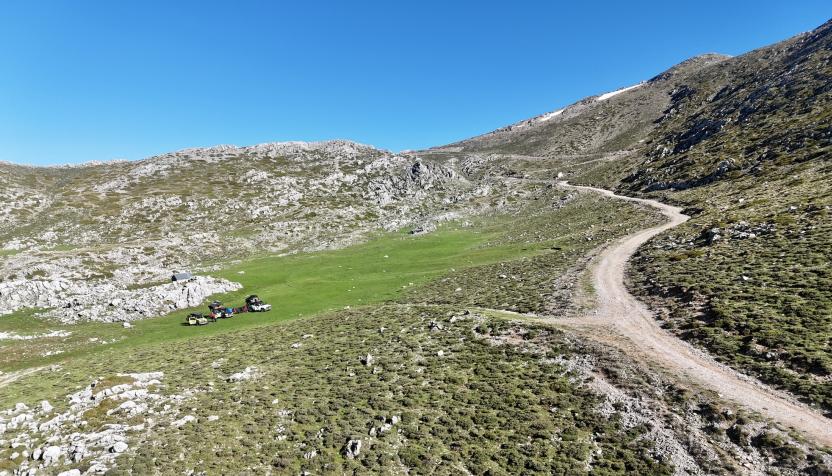
And the best thing for us off-roaders is this: in Greece, you’re legally allowed to drive on all unpaved roads and tracks that aren’t privately owned. Tracks lined with waterfalls or bizarre rock formations, abandoned villages, narrow gorges and vast plateaus: it would take years to discover all of Greece’s scenic highlights off-road.
Every rural region has its own character. On Mount Olympus, the ‘Mountain of the Gods’, there are routes reminiscent of the Swiss Alps, whilst its ‘little brother’, Ossa/Kissavos, boasts shady chestnut and beech forests. Just past the next hairpin bend, a mountain stream babbles; then wild orchids bloom by the wayside; and a little further on stands a strawberry tree covered in blossoms, bearing both red and yellow fruit.
Greece’s off-road mecca lies near the Albanian border in the Pindus Mountains: the Zagori region, comprising the districts of Metsovo and Valia Kalda. Here you’ll find forty quaint mountain villages with houses built of natural stone, most of which are still linked by centuries-old, hand-paved paths. Often, such a village has fewer than a hundred inhabitants. Incidentally, this region has been a UNESCO World Heritage Site for a few years now.
Of course, there are plenty of other spots in Greece that offer off-road holidaymakers unforgettable experiences. But Mount Olympus, Mount Kissavos and the Zagori region are the clear favourites among our off-road community. If you’re planning to explore Greece off-road for the first time, our tracks are a great place to start. If you’re as fascinated by the country as our scouts are, and you’ve discovered a few new routes on your own: do share them with us! We’d love it if you could help us make the Off-road Atlas even better.
Best time of year for off-road tours in Greece
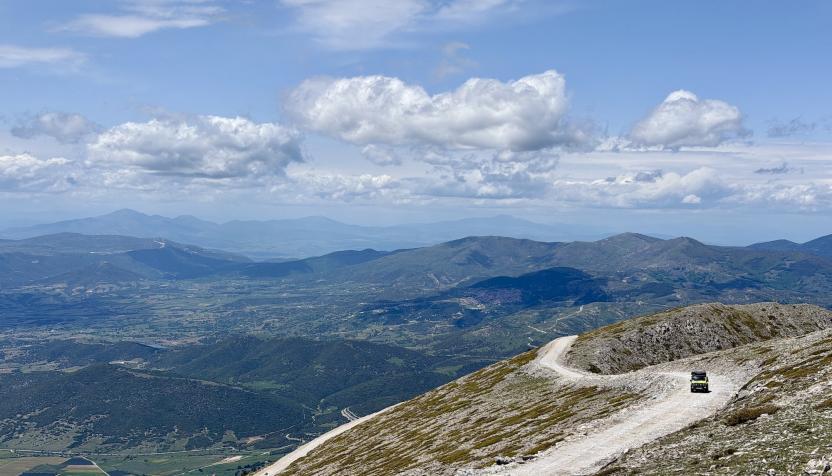
The period between early September and late November is ideal for an off-road trip to Greece. By then, the unpaved dirt tracks in the mountains have dried out considerably in the heat of midsummer and are much easier to drive on than in spring. What’s more, the sea in Greece is still warm enough for swimming until the end of October.
Although the beach bars have almost all closed by autumn, many seaside restaurants remain open all year round. It can sometimes snow as early as mid-October at altitudes above 2,000 metres, but the sun is still warm enough that the snow doesn’t settle. For the Greeks, October and November are the hiking season.
During the spring months of April and May, it starts to get quite warm in the sun in Greece. From May onwards, you can easily go for a swim in the sea again. At higher altitudes in the mountains, it’s often still quite chilly in spring – mainly after sunset until the early hours of the morning. Mount Olympus usually doesn’t lose its snow cap until the end of May.
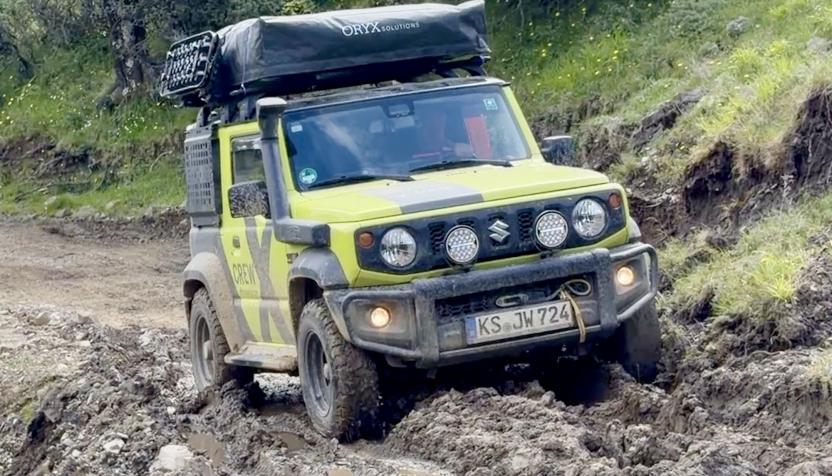
But even though the springtime atmosphere, fresh greenery and blossoming trees in May might make you fancy an off-road tour in Greece, at this time of year many tracks have muddy sections that aren’t suitable for off-road beginners. As for the period from June to the end of August, the off-road trails in Greece are fairly dry by then – but you should bear in mind that many beaches are very busy during the peak holiday season.
Greek traffic regulations
Generally speaking, the road traffic regulations in Greece are very similar to those in Germany. Motorcyclists should bear in mind that the 0.5 per mille alcohol limit does not apply to professional drivers, motorcyclists and drivers who have held their driving licence for less than two years. For this group of people, drinking and driving is not permitted under any circumstances.
On motorways, the speed limit for cars is 130 km/h; in built-up areas it is 50 km/h, outside built-up areas 90 km/h, and on expressways 110 km/h. Motorcyclists must not exceed 90 km/h on motorways, 70 km/h outside built-up areas, and 40 km/h within built-up areas. For campervans, the speed limit is 80 km/h on motorways and outside built-up areas, and 40 km/h within built-up areas.
Incidentally, the police in Greece are not permitted to collect fines on the spot. Anyone who pays their fine within ten days of committing a traffic offence receives a 50 per cent discount. Tolls are payable on motorways and in some tunnels in Greece. They are collected directly on site at so-called ‘toll posts’ and can be paid either by card or in cash. The amount of the toll depends on the vehicle class.
Another important point: at roundabouts, the vehicle entering the roundabout has right of way unless otherwise indicated by road signs. Furthermore, speed cameras are generally prohibited in Greece. This means you are not permitted to carry one, even if it is deactivated. Greek vehicles are required by law to carry a fire extinguisher. Foreign drivers are merely advised to carry one.
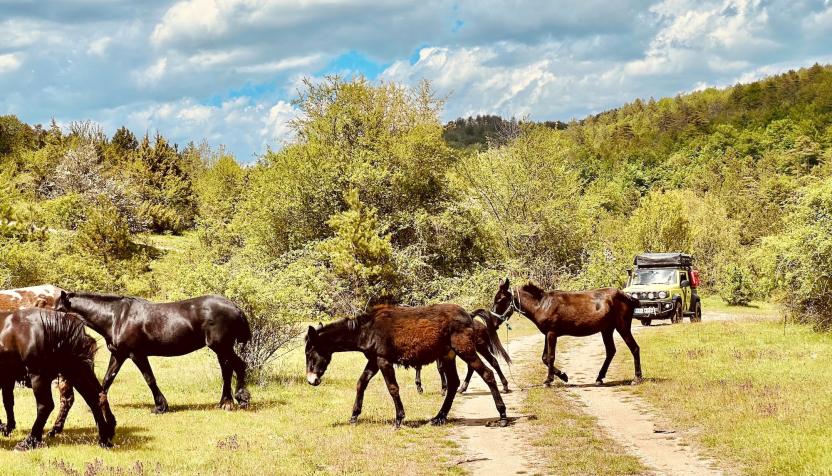
Free-standing and wild camping in Greece 2025
In January 2025, Law 5170 introduced new regulations on wild camping. Since then, camping with a tent or motorhome has been completely prohibited in the following locations:
• on beaches
• along the coastline
• at the edges of forests
• in forests
• and near archaeological sites
However, there is a ‘loophole’ for motorhome travellers: according to Article 38(6) of the new Greek Highway Code, which came into force on 17 June 2025, motorhomes longer than 7.5 metres may not be parked for more than 24 hours within built-up areas. Smaller campervans may be parked there without restriction – though awnings must remain retracted and no campsite may be set up, as failure to comply will result in hefty fines.
Fazit
Greece is a top off-road destination for the following reasons:
1. All public forest and country tracks in Greece are legally accessible
2. The mountains and the sea are close together
3. Exciting off-road tracks, even for experienced drivers
4. Diverse landscapes
5. The legendary Greek hospitality
Why not take a look right now at the tracks we’ve recorded in Greece?
References:
https://www.adac.de/news/reise-griechenland-strengere-regeln-wohnmobile/
https://www.naftemporiki.gr/clickatlife/2005089/tetraimero-sti-fthinoporini-valia-kalnta-apodrasi-stin-kardia-tis-pindoy/
https://www.adac.de/reise-freizeit/reiseplanung/reiseziele/griechenland/fahrzeug/#camping-und-gespanne
More from the magazine