 German
Closure or obstruction
The unpaved section has become heavily eroded, and landslides have occurred in some places. As a result, the road has narrowed in places but is still passable.
T
Thomas
Mercedes Sprinter · 18.05.2026


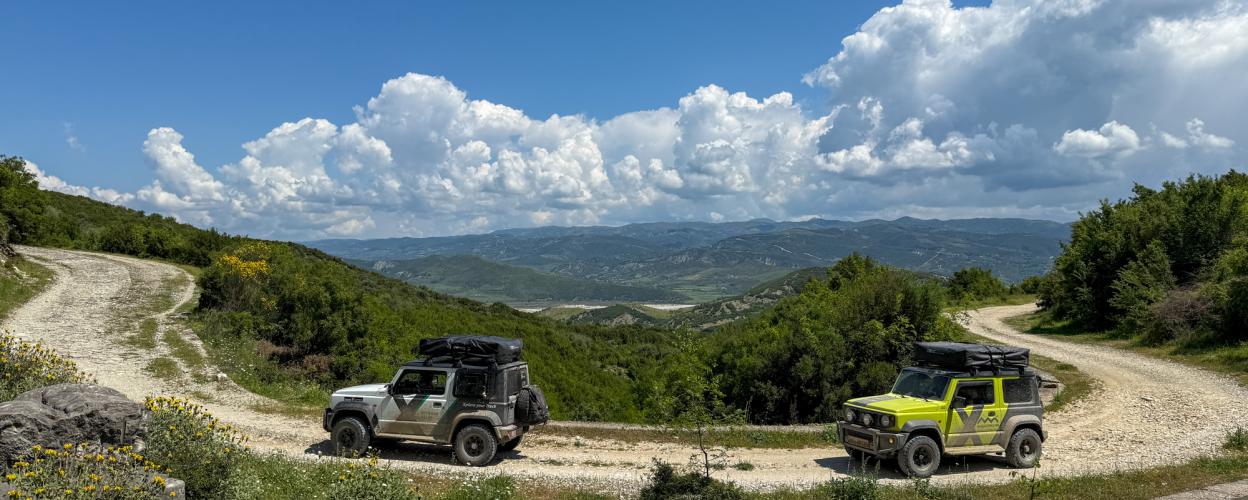
It’s hard to believe something like this still exists in Europe: a river that, over its entire 190-kilometer length, remains completely in its natural state—undammed, unchannelled, and unaltered. Yet that’s exactly what has been preserved in southern Albania with the Vjosa River. A specially designated nature park ensures that not only the Vjosa itself but also its three tributaries are left entirely to nature. Half of the park consists of water, while the rest comprises floodplains, gorges, and slopes.
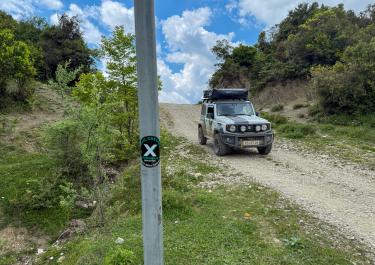
However, the creation of the park almost didn’t happen, as the Albanian government initially planned to build several hydroelectric power plants along the Vjosa. Fortunately, this didn’t come to pass—much to the relief of nature lovers and off-roaders alike. As a result, we can enjoy a beautiful and easy-to-drive track along the Vjosa Valley that offers stunning views of the river at every turn.
Starting on the SH 76, you head south from the coastal city of Vlorë, turn left after Kotë, and reach the trailhead near Sevastër. From the outset, the views are breathtaking—the Vjosa’s dark blue waters meandering below, interspersed with bright gravel and sandbanks. The surface is smooth gravel, free from surprises, making for a relaxed drive. The track remains above the river the entire time, only descending into the valley near Dukaj. From there, it’s another ten kilometers on asphalt to reach Tepelenë.
Conditions, closures and tips — from members who drove here recently.
The unpaved section has become heavily eroded, and landslides have occurred in some places. As a result, the road has narrowed in places but is still passable.
The eastern 14 km of the route have been paved. But the mountain road is still a pleasure to drive—lots of curves, secluded, and always with a view of the Vjosa Valley. On a somewhat longer steep section with deep gravel and loose rock, two motorcyclists had some trouble making their way up.
 Albania